

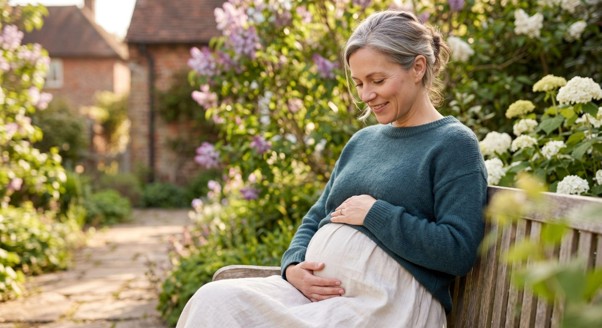
If you’re over 40 and wondering whether pregnancy is still possible with your own eggs, the answer is yes, for many women, it is. Natural conception and IVF using your own eggs both remain realistic options after 40, depending on your ovarian reserve, egg quality, and overall reproductive health. Donor eggs are one path, not the only one.
At OMA Hospital, a women’s speciality hospital in Chembur, this is one of the most common concerns we hear from patients trying to conceive later in life. This guide walks through what actually affects your chances after 40, which tests give you clarity, and when it’s time to see a specialist.
Understanding Fertility After 40
A woman is born with all the eggs she will ever have, and by her late 30s and 40s, both the number and genetic quality of those eggs have declined compared to her 20s. This decline speeds up after 35, and again after 40, which is why age is one of the strongest factors used in fertility assessments, though it isn’t the only one.
- Egg quantity (ovarian reserve): how many eggs remain, estimated through tests like AMH, Antral Follicle Count, FSH and Estradiol (e2) level.
- Egg quality: refers to an egg’s capacity to develop into an healthy embryo for which two main factors are involved – having the correct number of chromosomes (genetic) and adequate cellular energy.
A woman can have a lower egg count but still have reasonably good egg quality, or the reverse. Age matters, but so does overall health, hormonal balance, uterine condition, and your partner’s sperm quality. Two women the same age can have very different fertility profiles.
Can You Get Pregnant After 40 Without Donor Eggs?

- Natural conception is still possible, especially with regular ovulation and reasonably preserved ovarian reserve.
- IVF using your own eggs may still be an option. Success isn’t guaranteed, but it isn’t ruled out either; it depends on how your body responds to stimulation and the eggs retrieved.
- Individual factors matter more than age alone. Hormonal levels, uterine health, and lifestyle all play a part.
- Early evaluation gives you more options. Waiting several months while trying on your own may not be the best use of time after 40, an early workup with a gynecologist or fertility specialist tells you where you stand.
What Factors Affect Pregnancy Chances After 40?
Ovarian Reserve (AMH Levels)
Anti-Müllerian Hormone (AMH) is produced by developing eggs and estimates how many eggs remain. Low AMH after 40 is common and expected; it doesn’t mean pregnancy is impossible, it simply guides the treatment approach.
Egg Quality
Even with eggs available, their genetic quality matters for fertilization and healthy embryo development. Chormosomal screening is sometimes recommended as miscarrige rates significantly increases for women over 40.
Regular Ovulation
Consistent, predictable ovulation is a positive sign. Irregular or absent ovulation makes timing conception harder and may point to an underlying hormonal issue.
Uterine Health
A healthy lining and normal uterine cavity are essential for implantation, regardless of egg source. Fibroids, polyps, or a thin lining can affect whether a pregnancy continues successfully. Read more in our guide on endometrial thickness and pregnancy.
Partner’s Sperm Quality
Fertility isn’t only about the female partner. Sperm count, motility, and morphology all matter, which is why semen analysis is a standard part of any workup. Where issues are found, male infertility treatment is available.
Lifestyle and Overall Health
Body weight, thyroid disorders, diabetes, smoking, and alcohol use all influence fertility outcomes, independent of age.
What Fertility Tests Should You Consider?
| Test | What It Checks | When It’s Done |
| AMH Test | Ovarian reserve (egg count estimate) | Blood test, any day of the cycle |
| Antral Follicle Count (AFC) | Small follicles visible in the ovaries | Ultrasound, early in the cycle |
| FSH and Estradiol | Ovarian function | Blood test, day 2–3 of the cycle |
| Ultrasound Evaluation | Uterus, ovaries, and lining for fibroids or polyps | Any point in the cycle |
| Thyroid and Hormone Profile | Rules out imbalances affecting ovulation | Blood test |
| Semen Analysis | Sperm count, motility, morphology | Male partner, any time |
Can IVF Work After 40 Using Your Own Eggs?

- Who may benefit: women with reasonable ovarian reserve, regular cycles, and no major uterine or hormonal barriers are often good candidates, assessed case by case.
- Success rates decline with age, largely due to lower egg quality after 40. This doesn’t rule out success for every individual, but expectations should be realistic and discussed openly with your doctor rather than compared to younger age groups.
- Embryo quality is the next checkpoint. Embryos are graded on development, and genetic testing (PGT) may be recommended to check for chromosomal normality before transfer.
- When doctors raise alternatives: if repeated cycles don’t produce viable embryos, or testing shows very limited egg availability, your doctor may discuss donor eggs as one option among several, not a default.
Ways to Support Fertility After 40
Lifestyle changes can’t reverse the biological effects of age on egg quality, but they support overall reproductive health.
- Maintain a healthy weight: both underweight and overweight can disrupt ovulation.
- Eat a nutrient-rich diet: adequate protein, healthy fats, and antioxidants support hormonal health.
- Exercise in moderation: supports circulation, but excessive high-intensity training can interfere with ovulation.
- Manage stress: chronic stress affects hormone regulation; mindfulness or counselling can help.
- Get adequate sleep: poor sleep disrupts reproductive hormone regulation.
- Avoid smoking and excessive alcohol: both negatively affect egg quality.
- Take supplements only under medical guidance: options like CoQ10, vitamin D, or DHEA should only be taken after consulting your doctor.
When Is Donor Egg IVF Usually Recommended?

Donor eggs are typically discussed when ovarian reserve is very low, previous IVF cycles with your own eggs haven’t produced viable embryos, or genetic concerns make using your own eggs riskier. It isn’t the first option for every woman over 40; many still have sufficient reserve and egg quality to attempt treatment with their own eggs first. The decision should follow proper testing, not assumptions based on age alone. Learn more in our guide on egg and sperm donation.
Signs It's Time to See a Fertility Specialist
- Trying to conceive for six months or more after age 40
- History of miscarriage
- Irregular menstrual cycles
- Known reproductive conditions such as fibroids, endometriosis, or PCOS
- Previous unsuccessful fertility treatments
If any of these apply to you, it’s worth booking a consultation sooner rather than later.
Why Choose OMA Hospital for Fertility Care After 40
-
Getting a clear, honest read on your fertility and acting on it early is where good care begins. As a leading IVF hospital in Mumbai, OMA brings testing, treatment planning, and ongoing support together under one roof. What sets it apart:
- Women-only speciality focus: a dedicated women’s hospital in Chembur, built around female and reproductive health.
- Experienced leadership: led by Tanuja Uchil, trained in gynaecology, infertility, and reproductive medicine in India and Germany.
- Comprehensive testing: AMH, AFC, hormonal profiling, and uterine evaluation done under one roof.
- Realistic, individualised guidance: no one-size-fits-all age cutoffs, your treatment plan is built around your actual test results.
- Support at every stage: from first evaluation through IVF, and donor egg discussions if and when they become relevant.
FAQ
Can I get pregnant naturally after 40 without donor eggs?
What are the chances of IVF success after 40 using my own eggs?
Is low AMH a sign that pregnancy is impossible?
Which fertility test should I take first?
Does improving my lifestyle increase fertility after 40?
When should I consider fertility treatment?
Disclaimer: This blog is written for educational purposes only and does not substitute for medical advice. If you have received a cancer diagnosis and are concerned about your fertility, speak to a qualified specialist before your treatment plan is finalised.