

Best Gynecology Hospital in Mumbai
Most women spend years putting everyone else first. Their own health — the aches they brush aside, the irregular cycles they normalise, the discomfort they assume is just part of life — ends up last on the list. At OMA Hospital, we’d like to change that.
We’re a women’s speciality hospital in Mumbai, and gynecology sits at the heart of what we do. Whether you’re a teenager navigating your first period, a woman in her thirties dealing with PCOS or fibroids, or someone going through menopause and not quite sure what’s normal anymore — we see patients at every life stage. Our gynecologists in Mumbai don’t rush consultations. They ask questions. They listen. And they build a plan that actually fits your life — not a generic checklist.
Gynecology is one part of a broader picture at OMA. We also offer IVF and fertility treatments, maternity care, onco-gynecology, and aesthetic gynecology — all under one roof.
When Should You See a Gynecologist?
As a leading IVF centre in Mumbai, OMA Hospital offers a full spectrum of fertility treatments under one roof. We understand that no two fertility journeys are the same, so our offerings are designed to be flexible, thorough, and compassionate.
Come in if you’re experiencing any of the following:
Bleeding between periods, or spotting that feels unusual for you
Pain or pressure in the pelvis that isn’t linked to your period
Burning, itching, redness, swelling or soreness around the vaginal area
Discharge that looks, smells or feels different from what’s normal for you
Pain or discomfort during sex — this is more common than people talk about, and it’s very much treatable
Frequent urination, urgency or a burning sensation when you urinate
Abnormal bleeding during or after sexual activity
Periods that are extremely heavy, very irregular or have suddenly changed
You don’t need to wait until something becomes unbearable. If something feels off — even if you can’t quite name it — that’s enough of a reason to see a gynecologist in Mumbai. Early diagnosis almost always leads to better outcomes. You can also browse our patient resources for more information on common gynecological concerns.
Comprehensive Gynecology Services Offered at OMA
Gynecology at OMA covers a wide range — from the routine to the complex. Here’s what we offer:
PCOS and Endometriosis Management: Two of the most underdiagnosed conditions in women. Both can significantly affect quality of life and fertility. If left unmanaged, endometriosis in particular can impact your fertility journey. Our approach goes beyond managing symptoms — we look at the full picture and build a long-term care plan.
Minimally Invasive Procedures — Laparoscopy and Hysteroscopy: When investigation or treatment needs to go further, these procedures allow us to see inside the pelvis and uterus with minimal disruption to the body. Quicker recovery, less pain, smaller incisions than traditional surgery. Read more on our resources page.
Gynecological Surgery: For conditions that require surgical intervention — fibroids, ovarian cysts, endometriosis, or a hysterectomy — our team is experienced in both minimally invasive and open surgical approaches. Every procedure is performed in our certified Class 10000 clean-room OT. If a gynecological cancer concern arises, our onco-gynecology teamworks alongside us closely.
Have a condition you’d like to discuss? Our specialists are here.
Why Choose Our Hospital as the Best Gynecology Hospital in Mumbai?
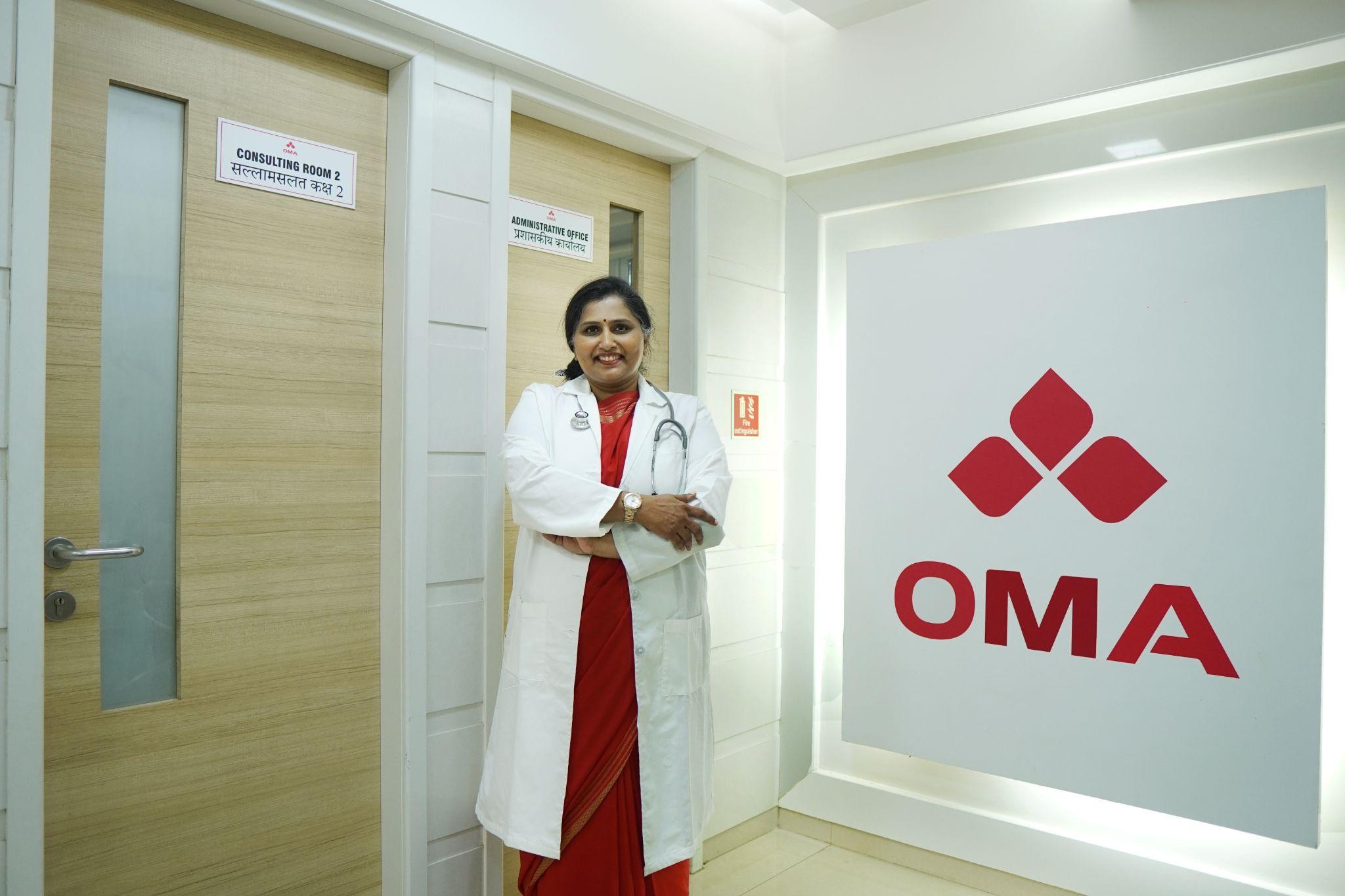
Specialists Who Actually Listen:
Tanuja Uchil (MBBS, DGO, DNB – OB-GYN, MNAMS)and Dr. Prasad Mahadevan and form the core of our gynecology team. Learn more about our doctors — between them, they bring decades of experience and an approach that treats patients as individuals, not conditions.
Care Across Every Life Stage:
Adolescent health, premarital counselling, reproductive years, pregnancy, perimenopause, menopause — we see women through it all. You don’t have to explain your history to a new doctor every few years. We build a relationship.
Minimally Invasive Whenever Possible:
Surgery, when it’s needed, is done with the smallest possible footprint. Laparoscopic and hysteroscopic procedures mean faster recovery, less pain and a quicker return to normal life.
No Waiting, No Rush:
We know what it feels like to sit in a waiting room for an hour and then get five minutes with a doctor who’s already halfway out the door. That’s not how we work. Appointments at OMA are properly scheduled and properly kept.
Transparent, Honest Conversations:
We tell you what’s happening, what the options are, what they cost, and what you can realistically expect. We don’t pad consultations with unnecessary tests, and we don’t recommend procedures you don’t need.
A Full-Spectrum Women’s Hospital:
Gynecology is one piece of a larger picture at OMA. We also offer maternity care, IVF and fertility treatment, onco-gynecology, neonatology, radiologyand aesthetic gynecology. If your care touches multiple areas, you don’t need to go to five different places.
Accessible Location:
We’re based at Chembur East — well connected from most parts of Mumbai. When you’re already dealing with a health concern, not having to travel across the city is a genuine relief.
Global Standards Meet Unparalleled Support
When we say our operating theatres meet international standards, we mean it precisely — not as a marketing phrase.
OMA’s OTs are Certified Class 10000 Clean Rooms. That’s a specific, verifiable classification that speaks to air quality, particulate control and infection risk — exactly the things that matter when you’re having any kind of procedure.
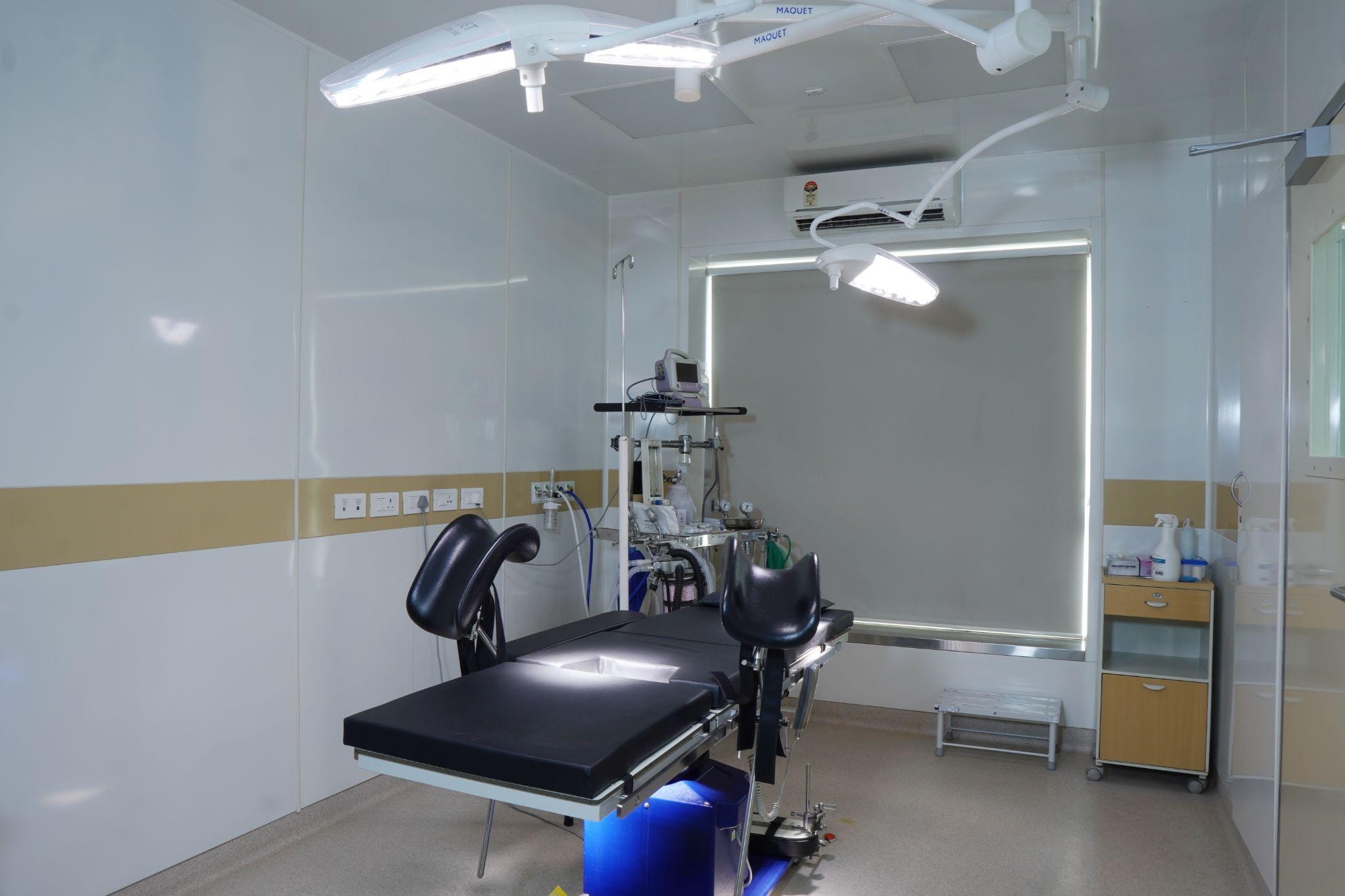
OT Lights from Steris, France: Surgical-grade lighting that eliminates shadows precisely where a surgeon needs clarity the most.
FAQs
Q1. How often should I see a gynecologist in Mumbai?
If you don’t have any current concerns, once a year is a good baseline — just for a routine well-woman exam and Pap smear if you’re due for one. If you’re managing a condition like PCOS, endometriosis or fibroids, we’d typically see you more frequently. And if something feels off between visits, don’t wait for your next scheduled appointment. Just come in. You can also check our resources page for guides on what to expect at a routine gynecology appointment.
Q2. What can I expect at my first visit to a gynecology hospital in Mumbai?
A conversation, mostly. Your first appointment at OMA Hospital is about getting to know you — your medical history, your current concerns, your lifestyle and what’s brought you in. Depending on what comes up, we might do a physical exam, recommend some tests, or both. Nothing will be done without explaining it to you first, and nothing will be rushed.
Q3. I’ve been having irregular periods for months. Should I see someone?
Yes. Irregular periods can have many causes — PCOS is one of the most common, but thyroid issues, stress, weight changes and other conditions can all affect your cycle. Getting a proper diagnosis means you’re treating the actual cause, not just masking it. If PCOS is found to be affecting your fertility, our IVF and fertility team works closely with our gynecologists for a joined-up approach.
Q4. Is laparoscopic surgery painful? How long does recovery take?
Laparoscopic surgery involves small incisions and a camera, rather than a large open cut. Most patients experience significantly less pain post-operatively compared to traditional surgery, and recovery is much faster — often days rather than weeks. You’ll be given clear guidance on what to expect before and after your procedure. Our radiology team supports pre- and post-operative imaging where needed.
Q5. Do you treat adolescent gynecological concerns at OMA?
Yes. We see young women from their early teens. First periods, irregular cycles, menstrual pain, questions about sexual health — all of it is handled with patience and sensitivity. If neonatal or paediatric concerns are also involved, our neonatology specialists are just down the corridor.
Q6. I’m going through menopause. Is hormone therapy right for me?
It depends on your symptoms, your health history and what you’re hoping to achieve. Hormone therapy works well for many women, but it’s not the right choice for everyone. We’ll discuss the options openly — including non-hormonal approaches. Some women also explore aesthetic and regenerative gynecology options for concerns related to intimacy and tissue health during and after menopause.
Q7. How do I book an appointment at the best gynecology hospital in Mumbai?
Call us at +91 72089 73301, email info@omahospital.com, or walk into our centre at Chembur East, Mumbai. You can also read more about who we are on our About OMA page, or explore our blogs for helpful articles on women’s health topics. We try to schedule appointments quickly — we know that waiting when you’re worried about something isn’t easy.