

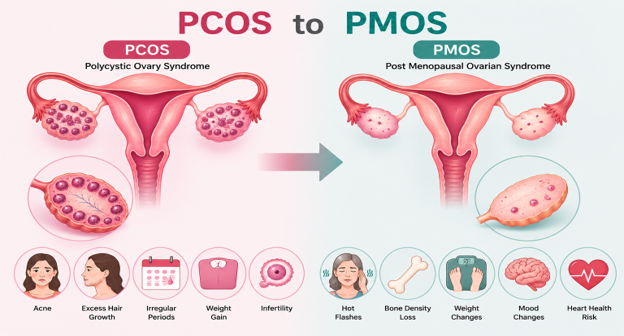
Polycystic ovary syndrome affects about 1 in 8 women, yet up to 70 percent go undiagnosed, often because their ovaries look normal on a scan. In May 2026, a global panel of doctors, researchers and patients renamed it. PCOS is now PMOS: polyendocrine metabolic ovarian syndrome. Same condition, with a name that finally describes what it does to the body.
If you were diagnosed with PCOS, nothing about your body has changed. What changes is how doctors look for the condition, treat it, and weigh its long-term risks.
At OMA Hospital, a women’s speciality hospital in Chembur, we have guided many women through exactly this confusion.
What Actually Changed in the Name
The old name pointed at one feature: cysts on the ovaries. But most women with the condition never had true cysts. What shows up on ultrasound are immature follicles, not cysts. So for years, women were told their scans were clear and sent home while their hormones told a different story.
The new name widens the lens across the whole condition:
- Polyendocrine: the many hormones involved, not just one. Insulin, androgens and others all play a part.
- Metabolic: the insulin resistance, weight changes and raised diabetes risk most patients live with.
- Ovarian syndrome: keeps the link to reproductive health and ovulation.
Recognising the Signs of PMOS
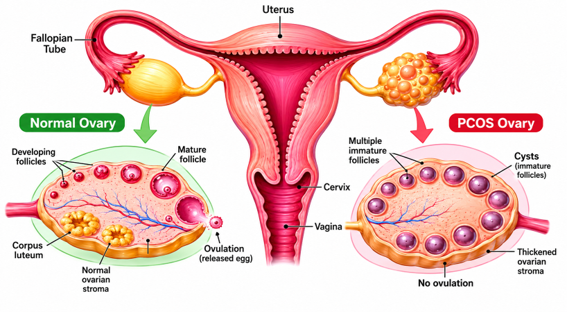
PMOS shows up differently from one woman to the next, which is part of why it gets missed. The signs often get blamed on stress or “just irregular periods” for years. Worth flagging to a doctor:
- Irregular or missed periods: cycles longer than 35 days, or fewer than eight a year, point to irregular ovulation.
- Trouble conceiving: many women first discover PMOS when they struggle to get pregnant.
- Excess hair growth or acne: higher androgen levels cause facial or body hair, oily skin and stubborn acne.
- Weight gain that resists effort: insulin resistance makes weight harder to lose, especially around the middle.
- Thinning scalp hair: male-pattern thinning at the crown is often missed.
- Mood changes: anxiety and low mood are common and deserve real support.
Any one alone may mean little. Several together is a reason to get checked. Booking a gynecology consultation early gives you answers instead of years of guessing.
Noticing several of these signs after years of uncertainty? Get checked before another cycle slips by.
Factors That Increase the Risk of PMOS
PMOS has no single cause. It comes from a mix of genetics, hormones and lifestyle. A few factors raise the likelihood:
- Family history: a mother or sister with PMOS or type 2 diabetes raises your risk.
- Insulin resistance: the core driver for most patients, present even in lean women.
- Excess weight: worsens insulin resistance and hormone imbalance, though lean women can have PMOS too.
- Sedentary lifestyle: low activity makes insulin resistance worse over time.
- Chronic inflammation: linked to higher androgen levels.
How PMOS tends to show up across different profiles:
Profile | Typical Picture | Main Focus of Care |
Lean PMOS | Normal weight, irregular cycles, hidden insulin resistance | Blood sugar checks, cycle support |
Metabolic PMOS | Weight gain, strong insulin resistance, diabetes risk | Diet, exercise, metabolic management |
Fertility-focused | Trying to conceive, ovulation disrupted | Ovulation support, IUI or IVF |
Modifiable factors like activity, diet and weight have the biggest impact over time. Small, steady changes often improve both symptoms and fertility.
When changes alone are not enough to conceive, structured female infertility treatment in Mumbai can pinpoint what is holding things back.
Treatment Strategies for PMOS
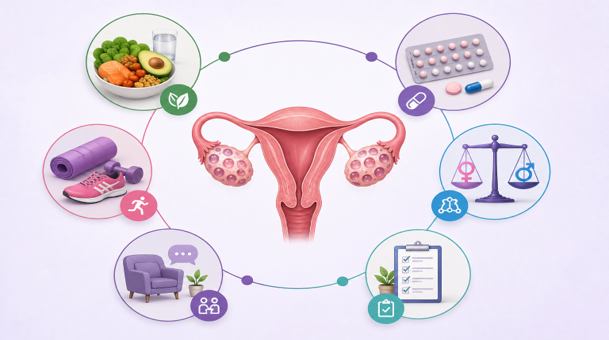
There is no one-size cure, but PMOS is very manageable. Treatment is built around your goals: regular cycles, clearer skin, better metabolic health or pregnancy.
When pregnancy is the goal, support ranges from ovulation help to IUI treatment in Mumbai, chosen once you know why ovulation is disrupted.
Main approaches include:
- Lifestyle changes: the foundation for everyone. Regular movement and a steady-blood-sugar diet improve insulin resistance and often restore ovulation.
- Medication for symptoms: options to regulate cycles, manage hair and acne, and improve how the body handles insulin, tailored to you.
- Ovulation support: medication can encourage regular ovulation. If that is not enough, IUI treatment in Mumbai places prepared sperm into the uterus as a gentle first step.
- Assisted reproduction: for complex cases, IVF treatment in Mumbai offers more control. PMOS ovaries respond strongly to stimulation, so protocols are tuned carefully to keep you safe.
- ICSI for low sperm quality: where sperm quality is a factor, ICSI treatment in Mumbai injects a single healthy sperm directly into the egg.
- Long-term monitoring: regular reviews track blood sugar, cholesterol and the ovaries over time.
Where you go matters as much as which treatment you pick. The right team treats the metabolic side of PMOS alongside the fertility side, since controlling insulin resistance improves both your cycle and your chance of a healthy pregnancy.
Living with PMOS and want a clear, whole-body plan? Take the first step toward answers today.
Why Choose OMA Hospital for PMOS Care

PMOS touches hormones, metabolism, fertility and mood at once, so it needs a team that treats the whole picture. As a leading IVF hospital in Mumbai, OMA brings that range together. What sets it apart:
- Women-only speciality focus: a dedicated women’s hospital in Chembur, with every service built around female health.
- Experienced leadership: led by Dr. Tanuja Uchil, trained in gynaecology, infertility and reproductive medicine in India and Germany.
- Whole-body approach: cycle, blood sugar, weight and mental health are looked at together, because in PMOS they are connected.
- Fertility under one roof: from ovulation support to IVF, ICSI and fertility preservation, no running between clinics.
- Care through pregnancy: once you conceive, pregnancy and maternity care keeps the same close monitoring going.
- Plans built around you: treatment tailored to your goals, whether that is regular cycles or a baby.
FAQ
Is PMOS a new disease?
No. PMOS is just the new name for PCOS. The condition is the same.
Why was PCOS renamed?
The old name was misleading, since most patients do not have true ovarian cysts. The new name reflects its hormonal and metabolic nature.
Can I get pregnant with PMOS?
Most women can. The earlier you plan, the more options you have.
Do I need new tests because of the name change?
Not for the name itself, but your next review may check blood sugar and hormones more fully.
Does PMOS go away?
It is long-term but very manageable with the right care.