

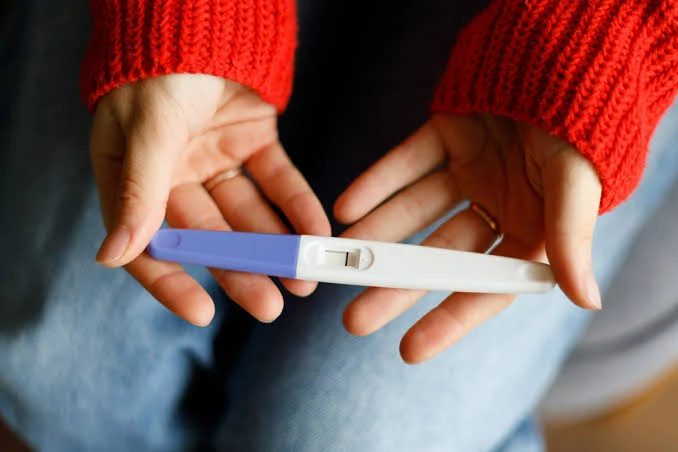
Your period is late, you have taken a test, and it reads negative. It is an unsettling place to be, because the obvious explanation has been ruled out and nothing has replaced it. A missed period with a negative pregnancy test is common, and pregnancy is only one of many reasons a cycle goes off track.
At OMA Hospital, a women’s speciality hospital in Chembur, this is a frequent reason women book a consultation. This guide covers the usual causes, when to retest, and when to see a doctor.
Could You Still Be Pregnant Despite a Negative Test?
Sometimes, yes. Home tests detect hCG, a hormone that rises after implantation. Testing before hCG has climbed high enough gives a false negative. This happens when:
- You tested too early: the most common reason. Implantation may have happened only days ago, so hCG is still low.
- Your urine was diluted: drinking a lot of fluid lowers the concentration. First-morning urine is most reliable.
- You ovulated later than expected: if ovulation shifted by a week, your period is not truly late.
- The test was faulty or expired: check the date and follow the timing in the instructions.
Retest after 3 to 5 days with first-morning urine. If it turns positive, care shifts to early pregnancy and maternity care. If it stays negative and your period has not arrived, the cause is likely something other than pregnancy.
Still unsure after retesting? A blood test gives a definite answer. Book a consultation to confirm.
Why Your Period Is Late When You Are Not Pregnant

Ovulation is easily disrupted, and when ovulation is delayed or skipped, the period that follows is delayed too. These are the usual reasons:
- Stress: raises cortisol, which interferes with the hormones that trigger ovulation.
- PMOS, formerly PCOS: irregular or missed periods are the hallmark, often with acne, excess hair or weight changes.
- Thyroid problems: an underactive or overactive thyroid can delay periods, and both are easily tested.
- Sudden weight change: rapid loss or gain, or low body weight, can pause ovulation.
- Intense exercise: heavy training with low energy intake is a recognised cause.
- Perimenopause: in your forties, cycles often lengthen and skip as hormones shift.
- Contraception and medication: starting or stopping hormonal contraception can pause periods for months.
- Illness or infection: a fever can delay ovulation for that cycle.
- High prolactin: raised levels suppress ovulation; a simple blood test detects it.
How Late Is Too Late? When a Missed Period Needs Attention
If your period has been absent for three months or more, or your cycles have been irregular for some time, a gynaecology consultation is the right step. Most causes are straightforward to identify.
What Tests Will a Doctor Do to Find the Cause?
Finding the reason is usually quick. A typical assessment includes:
- A blood pregnancy test: beta hCG is more precise than a home kit and settles the question.
- Thyroid and prolactin tests: two common, easily corrected hormonal causes.
- A pelvic ultrasound: a scan at the radiology unit checks the ovaries and uterine lining, and can show signs of PMOS.
- Hormone panel: estrogen, FSH and LH show what is happening with ovulation.
Treatment follows the cause. Thyroid and prolactin issues respond well to medication. PMOS is managed with lifestyle changes and hormonal support. Stress-related cycles settle once the pressure eases.
Missed Periods When You Are Trying to Conceive

Irregular or missed periods make it harder to time conception, because ovulation is unpredictable or absent. If you have been trying for over a year, or six months if you are over 35, a fertility review is reasonable.
Once ovulation is restored, many women conceive naturally. Where it is not enough, options such as IUI and IVF treatment in Mumbai can help, guided by what the tests show.
The starting point is the same: find out why ovulation stopped, then treat that cause.
If you are not ready to conceive yet but your cycles are irregular, fertility preservation is worth discussing early.
Periods irregular or absent for months? Take the first step and speak to our gynaecology team today.
Warning Signs That Need Prompt Care
Most late periods are not urgent. See a doctor promptly if a missed period comes with:
- Severe or one-sided pelvic pain: needs quick review, particularly if a pregnancy test was ever positive.
- Heavy bleeding when the period arrives: soaking through pads hourly is not normal.
- Milky nipple discharge: may point to raised prolactin.
- Sudden weight change, hair loss, or fatigue: possible thyroid or hormonal causes.
Missing periods for months also affects bone health long term, another reason not to leave it unchecked.
Why Choose OMA Hospital for Irregular Periods
Irregular cycles have many possible causes, so they need a team that tests broadly rather than guessing. As a leading IVF hospital in Mumbai, OMA brings hormonal, gynaecological and fertility care together. What sets it apart:
- Women-only speciality focus: a dedicated women’s hospital in Chembur, built around female health.
- Experienced leadership: led by Tanuja Uchil, trained in gynaecology, infertility and reproductive medicine in India and Germany.
- Complete testing in one place: hormones, thyroid and scans done together, so answers come faster.
- Care beyond the diagnosis: from cycle regulation to fertility support if you are planning a pregnancy.
- Plans built around you: treatment tailored to the cause, your history and your goals.
FAQ
Can I be pregnant with a negative test?
Yes, if you tested too early or with diluted urine. Retest in 3 to 5 days with first-morning urine.
How late can a period be without pregnancy?
A few days is normal variation. Beyond six weeks, or three months absent, see a doctor.
Can stress alone stop my period?
Yes. Stress disrupts the hormones that trigger ovulation, delaying or skipping a cycle entirely.
Does a missed period mean I am infertile?
No. It signals disrupted ovulation, which is usually treatable. Many women conceive once the cause is addressed.
What tests confirm the cause?
A blood pregnancy test, thyroid and prolactin levels, a hormone panel and a pelvic ultrasound.