

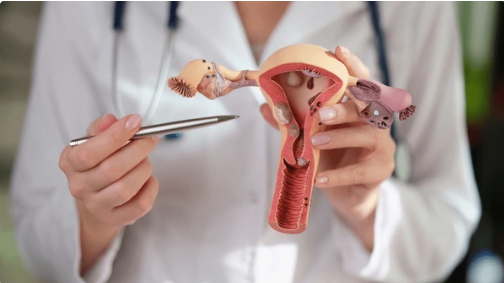
If a scan report has left you searching for what endometrial thickness means, you are far from alone. The endometrium is the lining of the uterus, and its thickness changes across the menstrual cycle. For anyone trying to conceive, this number matters, because an embryo needs a lining of the right thickness to implant and grow. A normal endometrial thickness for pregnancy usually falls between 8 and 14 mm at the point of ovulation or embryo transfer.
At OMA Hospital, a women’s speciality hospital in Chembur, this is one of the most common questions in fertility scans. This guide explains the normal range in mm, what affects it, and what your report is telling you.
What Is Endometrial Thickness and Why Does It Matter for Fertility?
The endometrium is the inner lining of the uterus. Each cycle it thickens under the influence of estrogen, ready to receive a fertilised egg, and sheds as a period if pregnancy does not happen. Its thickness is measured in millimetres on an ultrasound at the radiology unit, usually as part of a follicular study or fertility scan.
A lining that is too thin may struggle to support implantation, while one that is unusually thick can point to a hormonal imbalance worth checking. The right thickness at the right time is what supports a pregnancy.
Normal Endometrial Thickness in mm: Day-by-Day Cycle Chart
| Cycle Phase | Normal Thickness | What It Means |
| Just after period (menstrual) | 2 to 4 mm | Lining is thin, freshly shed |
| Early proliferative phase | 5 to 7 mm | Lining rebuilding under estrogen |
| Around ovulation | 8 to 12 mm | Ideal window for conception |
| Secretory phase (after ovulation) | Up to 14 to 16 mm | Lining ready for implantation |
For conception and embryo transfer, most specialists look for a lining of at least 8 mm with a healthy, triple-layer pattern on the scan. Values are a guide, not a strict pass or fail, and your doctor reads them alongside your hormones and history.
Unsure what your scan report means for your chances? Book a consultation and get a clear reading of your results.
Thin Endometrial Lining: Causes and Can You Still Get Pregnant?
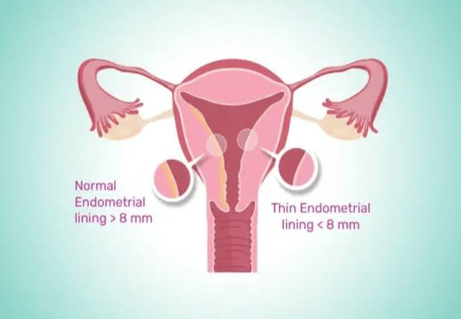
A thin endometrium, generally under 7 mm around ovulation, can make implantation harder, though pregnancy is still possible. Common reasons include:
- Low estrogen: the main hormone that builds the lining, so low levels keep it thin.
- Poor blood flow: reduced circulation to the uterus can limit lining growth.
- Scar tissue: past surgery, infection or repeated procedures can leave the lining thin in places.
- Certain medications: some fertility drugs can thin the lining as a side effect.
A thin lining often responds to treatment, from adjusting hormones to improving blood flow, so it is rarely the end of the road.
Thick Endometrial Lining: What It Means and When to Worry
A lining thicker than expected for the cycle phase is worth investigating, especially with irregular or heavy bleeding. Possible causes include:
- Hormonal imbalance: excess estrogen without enough progesterone can overbuild the lining.
- Polyps or fibroids: growths in the uterus can add to the measured thickness.
- PMOS and related conditions: hormonal disorders can affect how the lining develops.
Persistent thickening, particularly after menopause, needs a gynaecology review to rule out other causes. Most cases are benign and manageable.
How to Increase Endometrial Thickness Naturally for Pregnancy
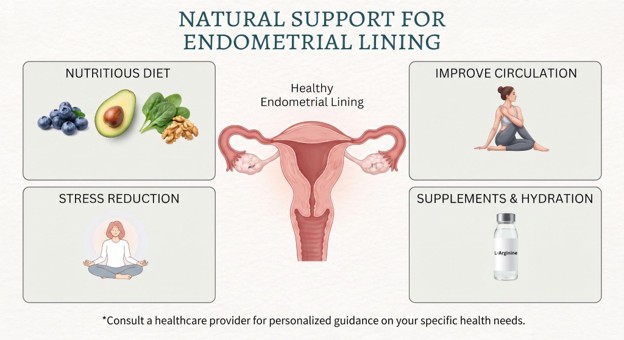
If your lining runs thin, the good news is that thickness often improves. Lining health is shaped by hormones and blood flow, and a few natural habits support both alongside any medical treatment:
- Stay active: gentle exercise improves circulation to the uterus.
- Eat a balanced diet: iron, vitamins and healthy fats support tissue and hormone health.
- Manage stress and sleep: both affect the hormones that build the lining.
- Follow your treatment plan: if you are in a fertility cycle, hormone support is tailored to your lining.
For women trying to conceive, lining is one piece of the picture. A full fertility workup, including IUI and IVF treatment in Mumbai where needed, looks at the lining alongside ovulation and hormones.
Trying to conceive and worried about your lining? Take the first step and speak to our fertility team today.
Why Choose OMA Hospital for Fertility and Scan Care
Reading a scan well and acting on it early is where good fertility care begins. As a leading IVF hospital in Mumbai, OMA brings scanning, fertility and hormonal care together. What sets it apart:
- Women-only speciality focus: a dedicated women’s hospital in Chembur, built around female and reproductive health.
- Experienced leadership: led by Dr. Tanuja Uchil, trained in gynaecology, infertility and reproductive medicine in India and Germany.
- Accurate scanning: detailed follicular and lining scans that guide the timing of treatment.
- Whole-picture care: lining, ovulation and hormones read together, not in isolation.
- Plans built around you: support tailored to your history, your cycle and your goals.
FAQ
What endometrial thickness is best for pregnancy?
Most specialists look for at least 8 mm, ideally 8 to 14 mm, with a triple-layer pattern around ovulation or transfer.
Can I get pregnant with a thin lining?
It is harder but still possible, and a thin lining often improves with treatment.
How is endometrial thickness measured?
By ultrasound, usually as part of a follicular study or fertility scan, measured in millimetres.
Does a thick lining always mean a problem?
No. It depends on the cycle phase, but persistent thickening with abnormal bleeding should be checked.