

IVF success rates in Mumbai sit highest for younger women, with those under 35 ending up around 50 to 60 percent per cycle, and from there it steadily eases off, roughly 40 to 50 percent for the 35 to 37 bracket, 25 to 30 percent for 38 to 40, and dropping to 10 to 25 percent once you cross 40. A few of the top Mumbai fertility centres do post slightly better numbers, sometimes touching 65 percent for women under 30 who also have strong ovarian reserve and good embryo quality. But the thing is, success on paper is never the same as success in your specific case, which really comes down to your AMH levels, the actual diagnosis behind the infertility, sperm health of the male partner, and which protocol the doctor picks for your age bracket. A proper, age-based consultation at OMA Hospital in Mumbai is what helps couples set realistic expectations based on their own numbers rather than someone else’s clinic average.
According to Dr. Tanuja Uchil, an obstetrician and gynecologist with over 25 years of experience in maternal care.
“Age affects IVF success more than any single factor we deal with, and being upfront with couples about realistic outcomes by their age group is what helps them make decisions they don’t regret later.”
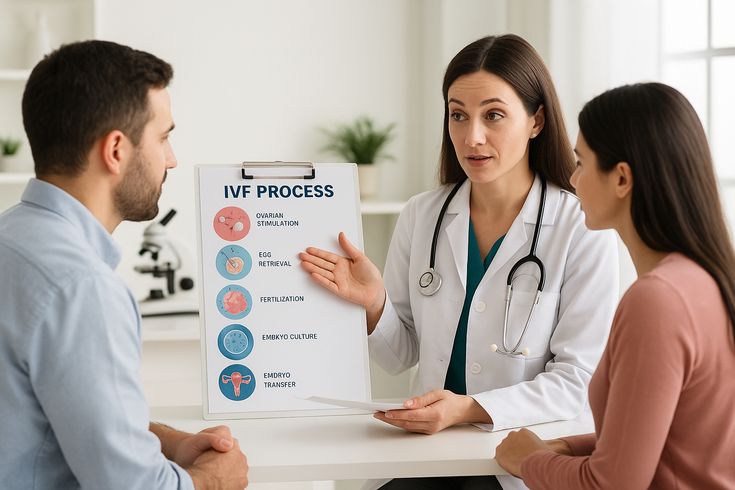
How Do IVF Success Rates Change With Age?
IVF outcomes shift with age because egg quantity and egg quality drop together as the years go, and the fertility window in women narrows quite a bit after the mid-thirties, usually without any obvious signs until couples actually start trying for a baby.
- Under 35 is where IVF really does best, mostly because ovarian reserve is still healthy, the ovaries respond to stimulation medication in a fairly predictable way, and embryos are much more likely to come out chromosomally normal, which is the whole reason single-cycle success is so common in this group.
- The 35 to 37 stretch is when things quietly start slipping, even when your monthly cycle looks perfectly regular month after month, because egg quality actually starts declining a few years earlier than most women realise, often with no outward warning whatsoever.
- By 38 to 40 the drop is steeper, and this is when PGT starts getting recommended more seriously by most fertility specialists, because chromosomal issues in embryos rise pretty noticeably past 38 and these are what end up causing most of the miscarriages and failed transfers you see in this bracket.
- Past 40, specially once you hit 41 or 42, success with your own eggs really does fall to single digits per cycle, and this is where donor egg IVF comes up as an actual option rather than some last-resort thing, because using a younger donor’s egg brings the success rate right back up to around 50 percent no matter what age the recipient is.
Male age also factors in (sperm quality does decline past 40, and it affects fertilisation as well as embryo development), so a proper couple-focused assessment matters just as much as the female partner’s age, which is why structured fertility treatment in Mumbai looks at both partners together right from the first consultation.
What Can Couples Do to Improve Their IVF Chances?
Age itself can’t be reversed, but everything sitting around it, the lifestyle side, the medical prep, the protocol choice, all of it genuinely does shift the odds in small ways that really do add up across a whole cycle.
- The six to eight weeks before IVF are more important than most couples think, with both partners getting a full fertility workup that covers AMH, thyroid, vitamin D, prolactin, a semen analysis for him, and a metabolic check, because something as routine as low vitamin D or a slightly off thyroid, once sorted, can change how the ovaries respond when stimulation starts.
- Weight correction actually does show up in the numbers, since a BMI above 30 or below 19 reduces implantation rates in a measurable way, and even something modest like a 5 to 10 percent weight shift over two to three months moves outcomes in the right direction by a visible margin.
- Lifestyle stuff shows up in IVF outcomes way more than people expect, so stopping smoking completely (yes, including the male partner, which a lot of couples skip), cutting alcohol to minimal, keeping caffeine to about one cup a day, and actually getting those 7 to 8 hours of sleep through the treatment cycle all improve egg and sperm quality within roughly three to four months of the change.
- Getting the right protocol for your specific age and diagnosis honestly matters more than almost anything else on this list, because what works for a 32-year-old with PCOS really doesn’t suit a 39-year-old with low AMH, and knowing when to add CoQ10, DHEA, or PGT when it genuinely makes sense is what actually separates experienced fertility specialists from template-driven clinics that run everyone through the same plan.
A plan built around your actual test numbers instead of generic protocols is what really changes outcomes over a full cycle, and the expert medical team at OMA designs every cycle around the specific age bracket and diagnosis rather than running patients through one-size-fits-all templates.
Why Choose OMA Hospital ?
Dr. Tanuja Uchil has been practising obstetrics and gynecology for over 25 years now, with her MD from Seth GS Medical College and KEM Hospital and further training in reproductive medicine from Kiel, Germany, which really is the kind of background that matters when IVF planning has to factor in age-specific protocols, declining ovarian reserve, and actually honest counselling about realistic outcomes for each age bracket rather than generic averages.
What couples usually end up saying about OMA’s approach is how realistic the success rate conversation actually is right from the very first visit, without inflated promises or hidden caveats tucked somewhere, with protocols genuinely matched to the specific age group and diagnosis, and the whole thing gets treated like a proper partnership across multiple cycles rather than just a one-time sit-down consultation.
FAQ
What is the best age for IVF treatment?
Under 35 is the ideal age range, with success rates of around 50 to 60 percent per cycle and better embryo quality.
Can IVF work after 40?
Yes, but success rates drop to around 10 to 25 percent per cycle, with donor eggs often recommended past 43 for better outcomes.
Does male age affect IVF success?
Yes, sperm quality declines past 40, affecting fertilisation rates and embryo development even with IVF or ICSI support.
How many IVF cycles should we plan for?
Most fertility specialists suggest planning for two to three cycles, as cumulative success rates improve significantly by the third attempt.
Is donor egg IVF the same success rate as normal IVF?
Donor egg IVF often achieves 50 to 60 percent success regardless of recipient age, because embryo quality depends on the younger donor’s eggs.
References link:
- IVF Success Rates by Age – Society for Assisted Reproductive Technology (SART)
- Female Age and Fertility – American Society for Reproductive Medicine (ASRM)